
The term ‘Ofsted’ is a shorthand for Office for Standards in Education, Children’s Services and Skills. It is the government agency responsible for inspecting the quality of educational providers in the United Kingdom and makes its reports available to the general public. These reports are often a key source of information for parents when choosing schools, both primary and secondary.
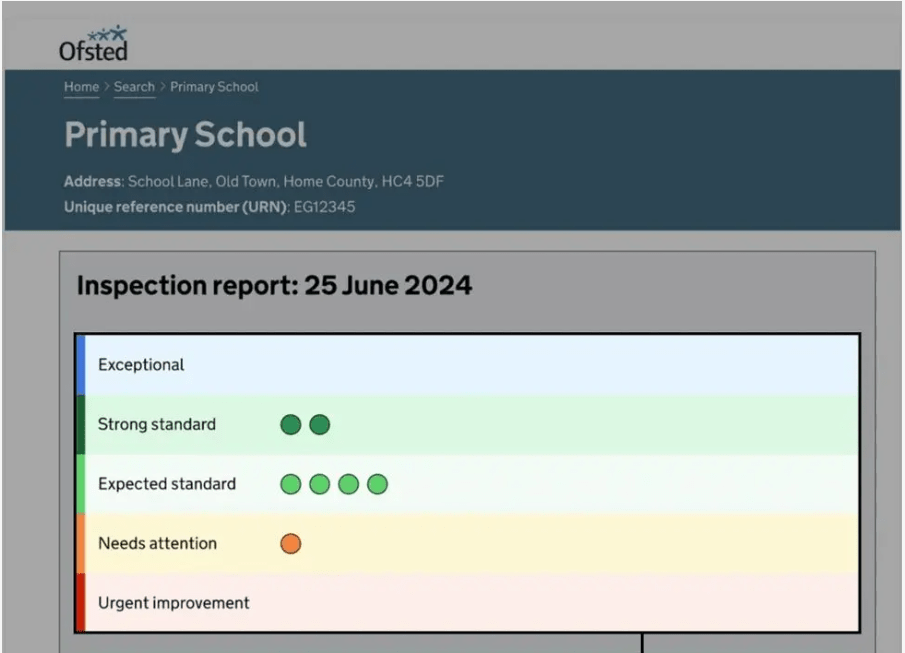
When parents look at an Ofsted report, quite often they will skip to the rating of a school, which takes several factors into account, including the behaviour of children at school, the quality of education, and so on. Previously, schools were rated as ‘outstanding’, ‘good’, ‘requires improvement’ or ‘inadequate’. However, as of November 2025, the grading system has changed; the new inspection reports will look different, focusing on a broader assessment via a ‘report card’ instead of one headline grade. The report will clearly set out what it is like to be a pupil at the school across several areas, according to Ofsted.
The New Grading System and How It Works
The new rating system no longer uses terms such as ‘outstanding’, ‘good’, ‘requires improvement’ or ‘inadequate’. Instead, there are five new terms parents should get used to. The new rating is shown below:
• Urgent improvement
• Attention needed
• Expected standard
• Strong standard
• Exceptional
The ratings, or scores, are somewhat self-explanatory and Ofsted say these changes are part of Ofsted’s commitment to making inspection reports more helpful for parents. By using these specific ratings for the quality of education, alongside other detailed commentary, the new-style report cards aim to give you a clearer, more detailed understanding of a school you are considering for your child.
In summary, the new Ofsted reports will work by:
1. Removing the overall single grade for the institution
2. Focusing on key findings that summarise the inspection’s conclusions
3. Presenting this information clearly at the start of the report, making it easier for you to understand the strengths and weaknesses identified
4. Switching to a score system across several areas, rather than a single headline rating
5. Suggesting what a student’s experience of a particular school might be like.
These updates are part of Ofsted’s direct response to the feedback it received, all aimed at improving the way Ofsted inspects education. The intention is to ensure that the inspection reports you read are more valuable and provide a better picture of the education on offer for your child.
Looking for downloadable resources? Head to our downloads page.
 Grammar School Pathway