Our approach
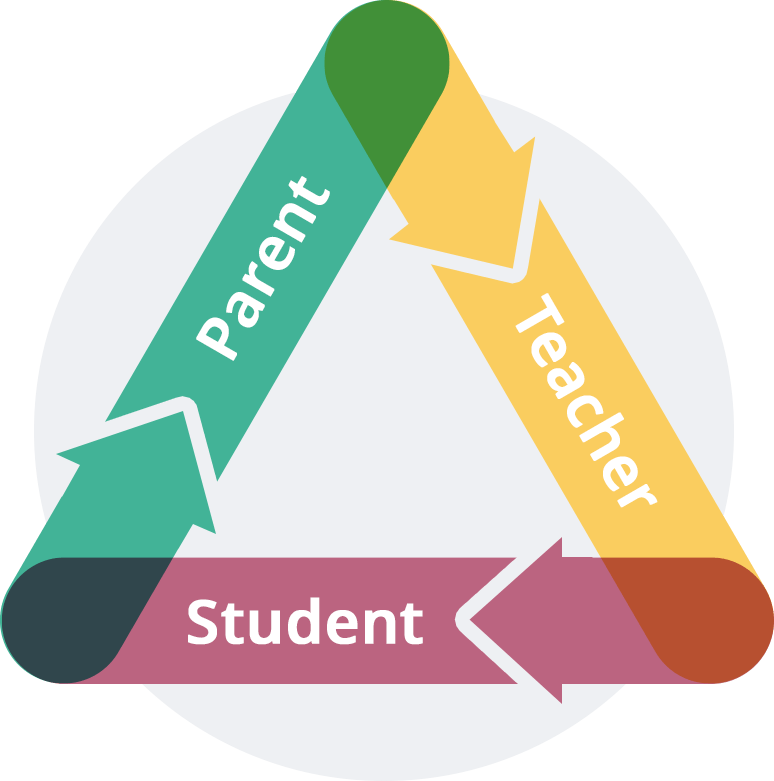
Our approach to tuition is underpinned by three things: the student, the teacher and the parent(s). We work closely with families to unlock the full potential of the student.
Without doubt, the student is the most important part of the triangle. After all, neither the parent(s) nor the teachers will sit the 11+ exam in September. Only the student will.
We go beyond just teaching
Baseline assessment
Our teachers will carry out a baseline assessment to determine the starting point of each child. This is very helpful because it may reveal gaps in learning, which must be addressed before a pupil can make progress in their learning.
1-to-1 time
In addition to the classroom teaching, each student gets 1-to-1 time, without interruption. This is designed into each session. This is an opportunity for students to clarify or ask any question they have.
Expert teaching
Our DBS checked tutors are qualified teachers, which means they hold both undergraduate and post-graduate degrees (PGCE). Our tutors have around 20 years of teaching experience. When they are not teaching 11+ in the evening, they are teaching in either primary or secondary schools in London.
Revision time
Learning the content and remembering the content are equally important. Our sessions have built in revision time to help learners remember what they learnt.
Mock exams
Our students undergo regular pencil & paper mock testing. In addition to testing what students understand, regular pencil & paper mock exams provide students with the confidence and familiarity needed when doing the real exam in September.
Exam analysis
We analyse mock results to find out which areas of the learning are weak. We give the parents the option to meet with us to discuss where and how improvements can be made.
Exam & learning/ revision techniques
We teach students how to become better learners through using methods based on educational research. This is known as ‘metacognition’ in the education world and we’re excited bring tried and tested ideas from schools to the 11+ context.
Health & Safety
All our tutors are ‘enhanced DBS’ checked (previously known as the CRB check). Also, in the unlikely event pupils hurts themselves, the first aid trained tutor will be able to administer first aid.
Curriculum
Our curriculum is designed to enable students to pass the Bexley, Kent and Medway 11+ exams.
Here is an outline of the curriculum:
English
- Selecting information / close reading / factual questions
- Vocabulary
- Identifying literary devices
- Paraphrasing (understanding complex vocabulary)
- Inference (deduction)
- Multiple choice comprehension exam techniques.
Maths
Foundational Maths
- Positive & negative numbers
- Operations (including ‘word problems’)
- Multiplication and fraction techniques
- Square/ cube numbers & roots
Fractions, Decimals & Percentages
- Fraction word problems (add, subtract, multiply, divide)
- Equivalent fractions, comparing fractions, shading fractions
- Multiples, factors, ordering fractions, HCF, LCM, word Problems
- Rounding decimals, order and compare decimals, add, subtract, multiply, divide decimals
- Decimal manipulation (with 10, 100, 1000, etc.)
- Conversions (fraction to decimals and percentages), percentage of a quantity, increase by a percentage, decrease by a percentage, find a percentage
- Increase and decrease percentage questions (e.g. discount, sale price, loss and profit, normal price, simple interest)
- Probability.
Ratios, Measurement & Sequences
- Simplify Ratio (a:b, a:b:c), share using a ratio (a:b, a:b:c), change ratios to percentages, change percentages to ratio, equivalent ratios, relative sizes, scale measuring units, scale drawings, etc.
- Direct and inverse proportions, recipe word problems
- Patterns and sequences, linear number sequences (integers, decimals), Nth term of a sequence, special sequences (triangular numbers, square numbers, etc.), geometric patterns and sequences
- Money, convert between metric units (e.g. currency exchange, length, weight, capacity, volume, etc.).
Algebra and BIDMAS
- Integer operations and BIDMAS
- Algebraic fractions and word problems
- Algebra age problems
- Speed/disstance/time
Geometry
- Shapes (2D & 3D) – identification and their properties
- Angles
- Nets, dimensions, coordinates
- Position and directions
- Triangles and polygons
- Volume, surface area, painting & slicing of cube and cuboids
- Area & perimeter of regular and compound shapes.
Data preentation and Statistics
- Tables
- Time and distance tables (e.g. train timetabbles)
- Pie Charts, venn diagram
- Bar chart, Line graph, pictographs
- Averages (mean, median, mode and range)
VR (Verbal reasoning)
- Word Meanings – Odd two out, Odd one out, closest meaning, word connections, similar meaning, opposite meanings.
- Making Words – Insert a letter, hidden word, missing word, move a letter, compound word
- Codes – Letter series, letter connection, word letter codes, word number codes
- Maths – Letters for numbers, number series, complete the sum, related numbers
- Reading description and revision.
NVR (Non-verbal reasoning)
- Odd one out
- Analogies
- Codes
- Reflections and rotations
- Matrices and like figures/ similarities
- Merge shapes and series
- Nets and 3D shapes/ blocks
- Holepunch/ fold.
Mock exams
We routinely test our pupils via mock exams (‘mocks’). We offer this is standard and do not charge extra for things like mock papers, answer sheets, etc.
We test pupils in English, Maths, VR and NVR.
The mocks are designed so they very closely imitate the real test pupils sit in September. This means all questions are multiple choice, they use paper and pencil, etc.
We run mocks during every school holiday (roughly every 6/7 weeks).
Parents may also book stand-alone mock sessions. We can facilitate mocks at our centre, or it can be done remotely. Please get in touch with us to discuss your needs.
Existing clients can view mock exams by clicking here.
 Grammar School Pathway